Economic Growth: Reducing reliance on raw materials and lowering production costs.
Environmental Sustainability: Minimizing ecosystem damage and emissions.
Social Impact: Creating green jobs and promoting sustainable practices.Union Minister lauded Prime Minister Shri Narendra Modi for instilling a ‘Can-do’ spirit in the Government. He stated that under PM’s leadership, India is not just talking about managing waste but about unlocking the value of waste and turning ‘Waste to Wealth’.The Minister detailed key government policies supporting sustainability in the automotive sector:
Vehicle Scrappage Policy (2021): Mandates fitness tests for passenger vehicles older than 20 years and commercial vehicles older than 15 years, replacing polluting vehicles with BS-VI-compliant models. This is projected to reduce up to 17% NOx and 11% PM2.5 emissions from freight trucks.
End-of-Life Vehicles (ELVs) Rules, 2025: To be effective from April 1, 2025, these rules ensure environmentally sound scrapping of vehicles, with manufacturers fulfilling Extended Producer Responsibility (EPR) by ensuring ELVs are properly scrapped in registered facilities. The scrapping of vehicles is also incentivized.
Promotion of Electric Vehicles (EVs): Initiatives like the Faster Adoption and Manufacturing of Electric Vehicles (FAME) and the Production-Linked Incentive (PLI) schemes are driving EV adoption on a huge scale. EV sales are expected to reach 35% of total vehicle sales by 2030, avoiding 5 metric tonnes of CO2 emissions annually.
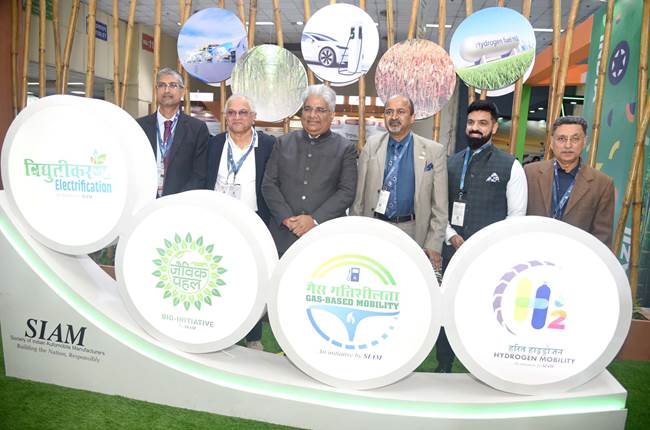 Shri Yadav emphasized the automotive sector’s role in achieving Sustainable Development Goals (SDGs), including SDG 7 (Affordable and Clean Energy), SDG 8 (Decent Work and Economic Growth), and SDG 9 (Industry, Innovation, and Infrastructure). He also stressed the importance of renewable energy for EVs to reduce the environmental impact of battery charging.The Union Minister called on SIAM and the automotive industry to lead the transition to a circular economy by incorporating recyclable designs, promoting sustainability in dealership operations, and enhancing consumer awareness. Shri Yadav concluded by underscoring the dual responsibility of the automotive industry to drive economic growth while ensuring environmental sustainability. He also encouraged participation in initiatives like the ‘Ek Ped Ma Ke Naam’ campaign, underlining the importance of afforestation in combating air pollution.
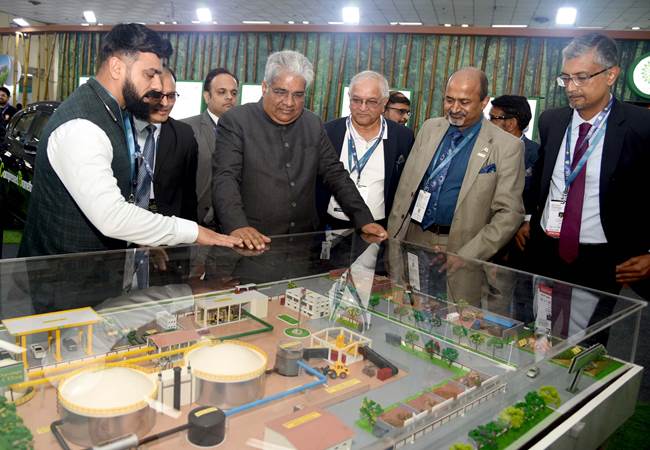 On the occasion, Shri Yadav also unveiled the SIAM Strategy Paper, titled ‘Towards Circular Future in the Automobile Industry: Integrating EPR Regime in Waste Stream Regulation”. Other dignitaries on dais included Shri Prashant K. Banerjee, ED, SIAM and Shri Vikram Kasbekar, CTO, Hero Moto Corp.


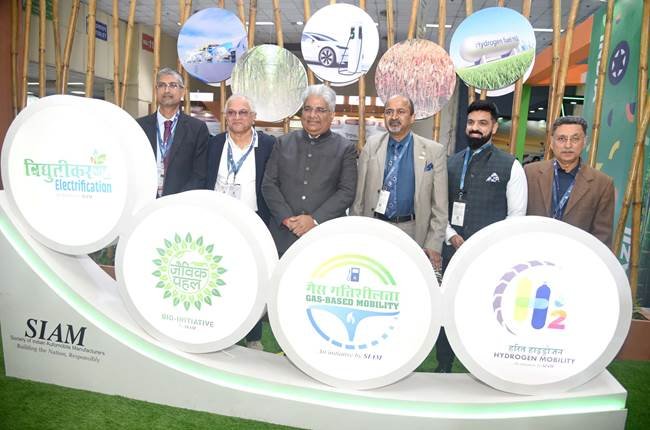


 [responsive-slider id=1466]