THE UNION WORLD CONFERENCE ON LUNG HEALTH SHOWCASES CRITICAL PROGRESS TOWARDS TB ELIMINATION
|
😊 Please Share This News 😊
|

As global aid budgets continue to come under increasing pressure, research and case studies presented at the Union World Conference on Lung Health highlight continued innovation in global lung health RIO DE JANEIRO, BRAZIL, 19 NOVEMBER 2026 – The Union World Conference on Lung Health, which has today opened in Rio de Janeiro, will spotlight new progress against TB globally. This follows the World Health Organization’s (WHO’s) Global Tuberculosis Report 2026, published last week, which laid bare the scale of the challenge: TB continues to cause more deaths than any other infectious disease globally, claiming more than one million lives and affecting over ten million people each year.
While global TB cases are slowly declining, with 2025 characterised as a year of stability and small improvements in TB services and epidemic trends, progress remains fragile. International donor funding fell significantly and the world remains far from its 2030 and 2035 targets to reduce the global burden of TB.However, breakthrough new research and case studies presented for the first time at the Union World Conference on Lung Health shows that progress against TB and lung diseases remains possible. Innovations in AI-powered screening, shorter treatment regimens and domestic resource mobilisation to support the sustainability of TB service delivery are just some examples of the new findings presented at the Union Conference.
“We have the knowledge and the tools to prevent and cure TB wherever it appears. The continued loss of life to TB on a global scale is nothing short of a profound historical injustice,” said Professor Guy Marks, President of the International Union Against Tuberculosis and Lung Disease (The Union), “This year’s Union Conference will spotlight the incredible progress being made by the lung health community to tackle some of the key barriers to TB elimination, including domestic funding, diagnostic capacity, and simpler and more effective treatment regimens. Recent years have been profoundly challenging, but when we unite to share knowledge, progress innovation and drive access to new technologies, we can accelerate the eradication of this terrible disease.
Breakthrough research presented at the Union World Conference on Lung Health 2026
Mobilising domestic resources to support sustainable TB service delivery
In the absence of sustainable foreign aid and funding, effective use of domestic resources to support the delivery of TB services has become critical. An innovative Enhanced Domestic Resource Mobilization (EDRM) model, designed to mitigate donor fatigue in TB service delivery in Nigeria has effectively reduced the 73% funding gap facing the national TB programme.
Presented by the Knowledge Network for Disease Control and Vigilance (KNCV) Nigeria, the model was evaluated between January 2022 and December 2024. Overall, total TB funding rose by 38% from USD$78.4 million, to $108.2 million, with domestic contributions rising from 18% to 41%. Meanwhile, reliance on international donors decreased from 82% to 59% during the evaluation period. State allocations grew by 64%, with 12% of total funding being contributed by the private sector. The EDRM model is designed to diversify financing and bolster the resilience of TB programmes through budget advocacy to increase state allocations, private-sector financing, and performance-based financing implemented across twelve states in Nigeria with a high-burden of TB.
Alongside these increases in the availability of domestic contributions to TB programme financing, the EDRM model was also associated with improved detection and treatment successes. Over the evaluation period, TB case notifications increased by 27% (312,000 to 396,000), while the cost per case detected reduced by 23% (USD$210 to $162). At the same time, treatment success rates improved from 86% to 91%. KNCV concluded that EDRM is a scalable, data-driven approach that significantly reduces donor dependency while improving clinical outcomes.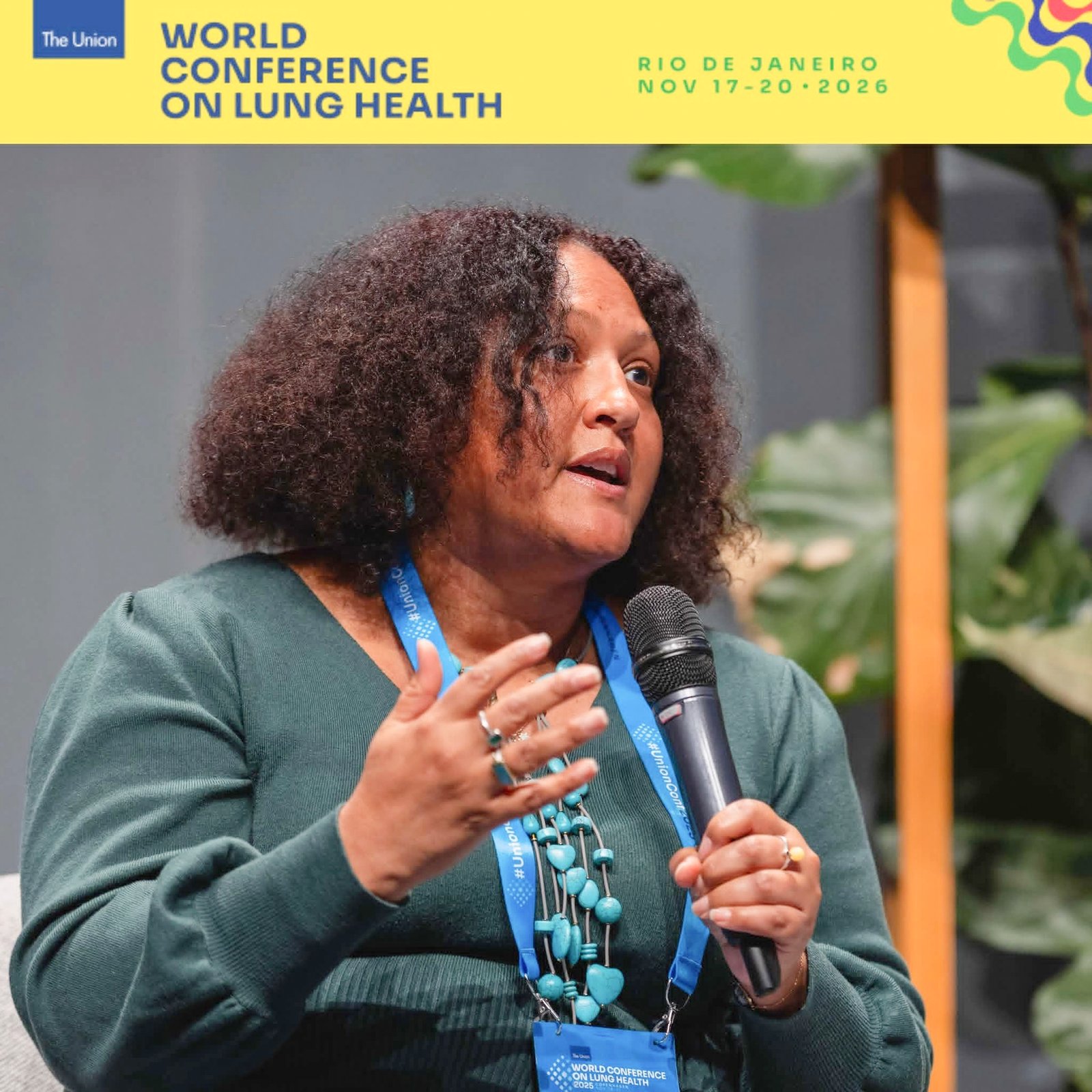 Victor O. Mosaku, Senior Finance and Accounts Officer at KNCV Nigeria, said: “The Enhanced Domestic Resource Mobilisation Drive (EDRM) model demonstrates how strategically combining domestic budget advocacy with private-sector co-financing can reduce Nigeria’s reliance on donor funding while strengthening TB case detection and improving treatment outcomes.
“It provides a practical, sustainable approach to building resilient, domestically financed TB programmes and offers a scalable model for low- and middle-income countries navigating the transition from external aid dependence to greater domestic ownership and financing.”
Dr Kavindhran Velen, Chief Scientific Officer at The Union, said: “Recent years have been a profoundly challenging time for the global health community. The sustainability of critical health programs has been placed in jeopardy, preparedness for future threats has been undermined and, most importantly, too many people have lost their lives to preventable illness.
“This research presented at The Union World Conference on Lung Health is a welcome glimmer of hope. Whilst international aid remains critical in our fight against TB, domestic resource mobilization can help to ensure crucial programs remain sustainable and continue our progress.”
AI-assisted TB screening offers new alternative in resource-limited settings
The WHO treatment decision algorithm-A (TDA-A), a clinical scoring system recommended globally for diagnosing pulmonary TB in children aged under 10 years old, includes the use of a chest x-ray (CXR). This requires the availability of clinicians trained to analyse CXR. In resource-poor settings, where this expertise is limited, implementing TDA-A can be challenging and limit the availability of accurate TB screening in children. In the face of this challenge, a new study presented at the Union World Conference on Lung Health explored the value of integrating computer-aided detection (CAD) of TB within this algorithm. The study found that the AI-powered CAD model outperformed human readers, indicating that AI-assisted detection software may provide a practical alternative for diagnosing childhood TB in resource-limited settings where expert radiological interpretation is unavailable.
The study retrospectively examined diagnostic accuracy of a cohort of 525 children in The Gambia aged under 10 years and with presumed pulmonary TB, recruited between 2012 and 2024. Trial leads developed an integrated diagnostic model combining clinical features from the WHO-TDA-A, with paediatric-optimised qXR (an AI-powered CAD software). The performance of this model was then compared against the standard WHO-TDA-A (human readers).
Dr Victory Edem, Postdoctoral Research Fellow at the Medical Research Council Unit The Gambia at London School of Hygiene and Tropical Medicine, said: “Our research demonstrated that integrating a pediatric-optimised computer-aided detection (CAD) score for tuberculosis into the WHO Treatment Decision Algorithm A had comparable diagnostic performance to that achieved using expert human chest X-ray interpretation.
“This AI-assisted approach provides a practical alternative to support implementation of the WHO-TDA A at Primary health care level in resource limited settings where expert radiological interpretation is unavailable.”
Prof Guy Marks, President of The Union, said: “If TB is a threat anywhere, then it is a threat everywhere. Effectively screening for TB in high-burden, low-resource settings is a keystone in our progress towards eliminating this disease. “New technologies such as AI open new routes towards better detection of TB. And, when we can detect TB, we can treat it and break the chain of transmission. It is exciting to see innovative new approaches presented at the Union World Conference on Lung Health, which have the potential to benefit countless at-risk communities worldwide.”
Clinical trial identifies promising combinations for shorter pulmonary TB treatment
TB treatment regimens can be lengthy, requiring long periods in hospital, greater discomfort, and a higher risk of missing doses that may contribute to the risk of drug resistance. Shorter treatment regimens may help to address these challenges, while supporting improved outcomes and recovery from TB. The first results from PARADIGM4TB, a multi-arm, multi-stage phase 2 platform trial, presented at the Union World Conference on Lung Health, have identified promising combinations containing the investigational drugs ganfeborole or BTZ-043, supporting further research into shorter treatments for pulmonary TB. Researchers concluded that ganfeberole- and BTZ-043-containing regimens have the potential to shorten treatment, potentially lasting between 12- and 20-weeks.
The trial randomised 401 adults with rifampicin-susceptible pulmonary TB across 12 treatment arms, comparing ten new 16-week regimens and a three-drug comparator with standard 24-week treatment. Combinations of ganfeborole or BTZ-043 with bedaquiline, pretomanid and moxifloxacin showed the strongest activity against TB bacteria.
Dr Nicholas Paton, Professor of Infectious Diseases at the National University of Singapore, said: “The PARADIGM4TB trial tested 10 novel 4-month TB treatment regimens that were built around one or both of the new TB drugs, ganfeborole and BTZ-043. Testing so many new regimens in one trial is unprecedented in the TB field.
“From these, we identified several promising regimens that are now being evaluated, within the same trial, to find the shortest duration for each that can maintain optimal efficacy; and that could potentially advance to Phase 3 trials. As well as being successful in finding promising new drug regimens, this trial has shown the feasibility and advantages of this new approach to testing multiple regimens in a single TB trial.”
Dr Cassandra Kelly-Cirino, Executive Director of The Union, said: “For people affected by TB, every additional week or month of treatment takes a huge toll on their lives and wellbeing. Shorter regimens can help reduce that burden while also making treatments easier to complete.
“Breakthrough research presented at the Union World Conference on Lung Health shows that this is possible. By coming together, we can ensure that people everywhere can benefit from shorter, simpler and effective treatments for TB.”
New study highlights lasting developmental impact of TB meningitis in children
New research presented at the Union World Conference on Lung Health has highlighted substantial developmental delays in children with tuberculous meningitis (TBM), a severe form of TB affecting the membranes surrounding the brain and spinal cord. The findings underline the importance of understanding the disease’s impact during children’s crucial early developmental years. The prospective study recruited 144 children with suspected TBM at Tygerberg Hospital in Cape Town, South Africa, including 73 with TBM and 71 ultimately found to have other diseases. Developmental assessments covering language, motor skills and social-emotional development were conducted one year after diagnosis. Among those assessed, children with TBM had significantly higher odds of substantial developmental delay than the comparison group.
Researchers concluded that TBM can have substantial consequences for children’s development, reinforcing the need to improve care beyond TB treatment. Dr Carien Truter, Pediatrician, Stellenbosch University Desmond Tutu TB Centre, said: “Tuberculous meningitis is not just a disease that threatens a child’s life; it can fundamentally alter the course of that child’s future. Even when children survive, many are left with significant neurodevelopmental difficulties that affect their learning, independence, and quality of life. “Our research aims to shine a light on this often-overlooked burden and highlight why survival alone is not enough. Children need long-term follow-up, early identification of difficulties and appropriate support to give them the best possible chance to thrive.”
Dr Kavindhran Velen, Chief Scientific Officer at The Union, said: “The continued existence of TB is a profound, historical injustice. Nowhere is this injustice clearer than in the avoidable harm the disease inflicts upon children.
“This research highlights the urgent need to step-up global efforts to eradicate TB and support high-risk communities. It is time for the global lung health community to come together to share knowledge, drive access to effective care and treatment globally, and prevent the avoidable harm caused by TB.”

|
व्हाट्सप्प आइकान को दबा कर इस खबर को शेयर जरूर करें |


 [responsive-slider id=1466]